
Things to Do in Vienna: 20 Best Sights, Cafés, Palaces and Views
This site may contain affiliate links. If you click through and make a purchase, I may earn a small commission at no extra cost to you. You can review the T&Cs for more information. Thank you for supporting the blog.
Vienna is one of those cities where you walk a few steps, look up, and suddenly you are standing in front of another beautiful building or church. It’s packed with history, music, museums, coffee houses, and proper “I can’t believe this is real” architecture.
I work in Vienna, and even though I’m there regularly, I’ve still done sightseeing around 10 times, including showing friends around the city centre, heading out to the Prater, and doing the classic Schönbrunn Palace day. It’s one of the best places for a solo trip, because it’s comfortable to walk around alone, and it feels completely normal to eat alone, especially in a café.
If you’re visiting Vienna and you want the best things to do (without overplanning every minute), this guide is for you.
TL;DR: Vienna highlights (1, 2, 3 days)
If you are short on time in Vienna, here are a few easy ways to plan.
If you have 1 day in Vienna
- Walk the city centre of Vienna (Innere Stadt) and pop into a couple of churches.
- See St Stephen’s Cathedral (Stephansdom).
- Choose one big-ticket sight: Hofburg Palace or Schönbrunn Palace.
- Finish with a classic coffee house stop, ideally Café Central.
If you have 2 days in Vienna
Do the one-day plan, plus:
- Belvedere Palace (Upper Belvedere for the views).
- The Prater (even if you only go for a walk and a Ferris wheel photo).
- Add one museum (for example, Kunsthistorisches Museum if you love art museums).
If you have 3 days in Vienna
You can slow down and add:
- Spanish Riding School (morning exercise or a performance).
- Vienna State Opera (even if it’s “just once” for the experience).
- A viewpoint like the Donauturm for views over Vienna.
- A little wandering day where you simply follow whatever looks pretty.
Best things to do in Vienna (the main list)
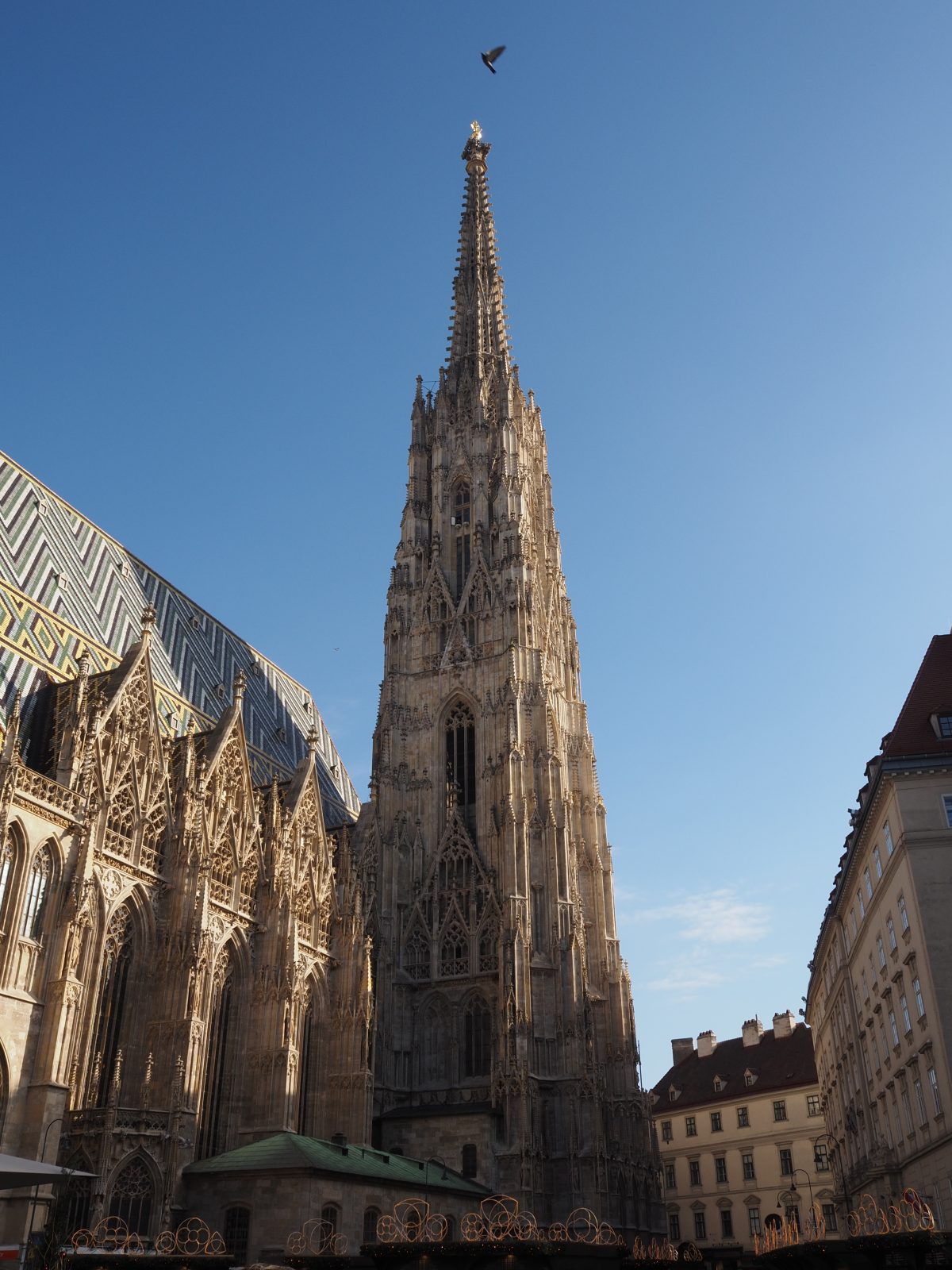
1) St Stephen’s Cathedral (Stephansdom), Vienna’s Gothic icon
If you’re visiting Vienna for the first time, Stephansdom is the obvious starting point, and it deserves the hype. It’s right in the centre of Vienna, which means you can build a whole day around it without trying.
Even if you’ve seen a lot of cathedrals, this one still has that “wow, this is old and important” feeling. It’s also the perfect place to do what Vienna does best, which is wander.
Quick tip: After you visit, don’t rush to your next attraction. Walk a little, look up, and let the streets of Vienna show off. This is how you get those “stunning Vienna” moments without trying.
2) Walk Vienna’s city centre (Innere Stadt) properly
I know “walk around the city centre” sounds too simple, but it genuinely is one of the best things to do in Vienna.
The historic centre of Vienna is compact, and the density of beautiful buildings is ridiculous. You can go from a cathedral to a palace vibe street to a hidden church in minutes.
What to do:
- Pick a rough loop (Stephansplatz, Graben, Hofburg area).
- Give yourself permission to detour.
- Keep your camera ready, because you will use it.
If you want a guided tour feel without joining a group, this is where self-guided routes shine, and I’ll share what I use later.
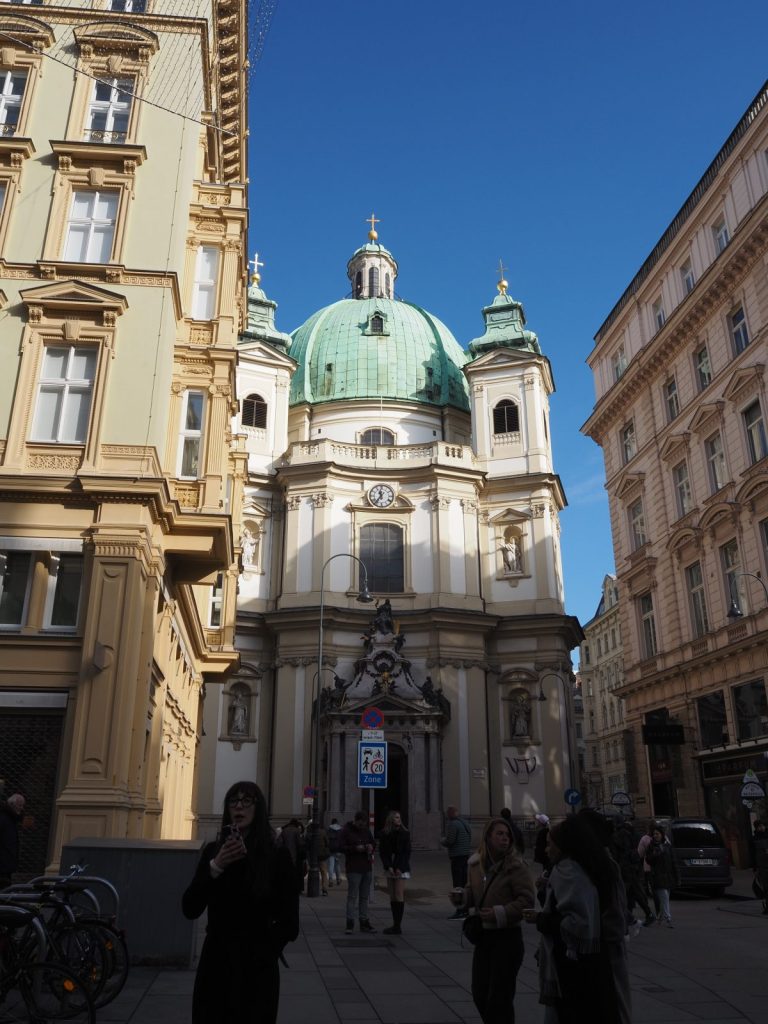
3) Step inside St Peter’s Church (Peterskirche), baroque surprise
From the outside, Peterskirche is lovely.
On the inside, it’s genuinely great.
If you like baroque interiors, this is a must, and it’s also a perfect example of Vienna being full of little surprises. You can be heading somewhere else, see a church door open, walk in, and suddenly you’re staring at a ceiling that looks like it took a lifetime to paint.
Solo traveller note: Churches are an easy “quiet break” during a busy sightseeing day, and you never look out of place visiting alone.
4) Hofburg Palace (Hofburg Palace complex), Vienna’s power centre
The Hofburg is not just one building, it’s a whole world.
If you’re into imperial history, or you simply want to see where a huge chunk of Austrian power and culture sat for centuries, Hofburg Palace is one of the top attractions in Vienna.
This is also where you can add in the Sisi Museum if you want that side of Vienna’s story. It’s a popular pick for a reason, and it’s one of those places that helps connect the grand buildings to the people who lived behind them.
Planning tip: Hofburg can take more time than you expect. If your time in Vienna is short, choose the parts that interest you most and do them well, rather than trying to see everything at once.
5) The Austrian National Library, one of Vienna’s most photogenic interiors
If you love beautiful interiors, the Austrian National Library is a strong contender for “best five minutes with your camera” in Vienna.
Even if you’re not an “I love libraries” person, it has that dramatic, historic atmosphere that makes you slow down. It’s also a nice balance to the palaces, because you get grandeur without feeling like you’re doing the same attraction over and over.
Pair it with: a Hofburg visit, because you’re already in the right area.
6) Spanish Riding School (Spanish Riding School in Vienna)
You don’t need to be obsessed with horses to appreciate the Spanish Riding School. It’s one of those “only in Vienna” experiences that feels very Viennese.
If you want to see a performance, great.
If you prefer something a bit more casual, the morning exercise can be a good option too, because you still get the atmosphere without making it a huge evening event.
Small tip: This is one of the few attractions in Vienna where it can be worth planning ahead, especially if you’re travelling in peak season or on a winter trip.
7) Kunsthistorisches Museum, the big art museum classic
If you like museums, Vienna is packed.
Kunsthistorisches Museum is one of the best museums for classic art, and it’s a solid choice if you want an “art museum day” that feels like a proper Vienna experience.
If you’re not a museum person: You do not have to force it. Vienna has enough outdoor beauty that you can build an amazing trip to Vienna without spending hours inside galleries.
8) Belvedere Palace (Upper Belvedere for the view)
Belvedere Palace is one of my personal favourites, and the view from the Upper Belvedere is amazing.
You get that perfect combination of:
- baroque palace beauty
- garden strolls
- one of the nicest “pause and breathe” viewpoints
It’s also a great place to visit if you want something that feels grand but not overwhelming. You can do it at your own pace, and it works well for solo travellers because it’s easy, scenic, and relaxing.
Extra note: If you’re the kind of person who loves a good photo, give yourself time here. The setting makes it very easy to take 100 pictures without noticing.
9) Schönbrunn Palace (Schönbrunn Palace) and the gardens
Schönbrunn Palace is the big one.
It’s a must-see in Vienna for many visitors, and if it’s your first visit to Vienna, it’s worth it. The key is not turning it into an exhausting “we must do everything” day.
How to do it without burning out:
- Decide if you want palace rooms, gardens, or both.
- If it’s a nice day, prioritise the outdoor areas.
- Plan a café break, because Vienna is full of great places to sit down and reset.
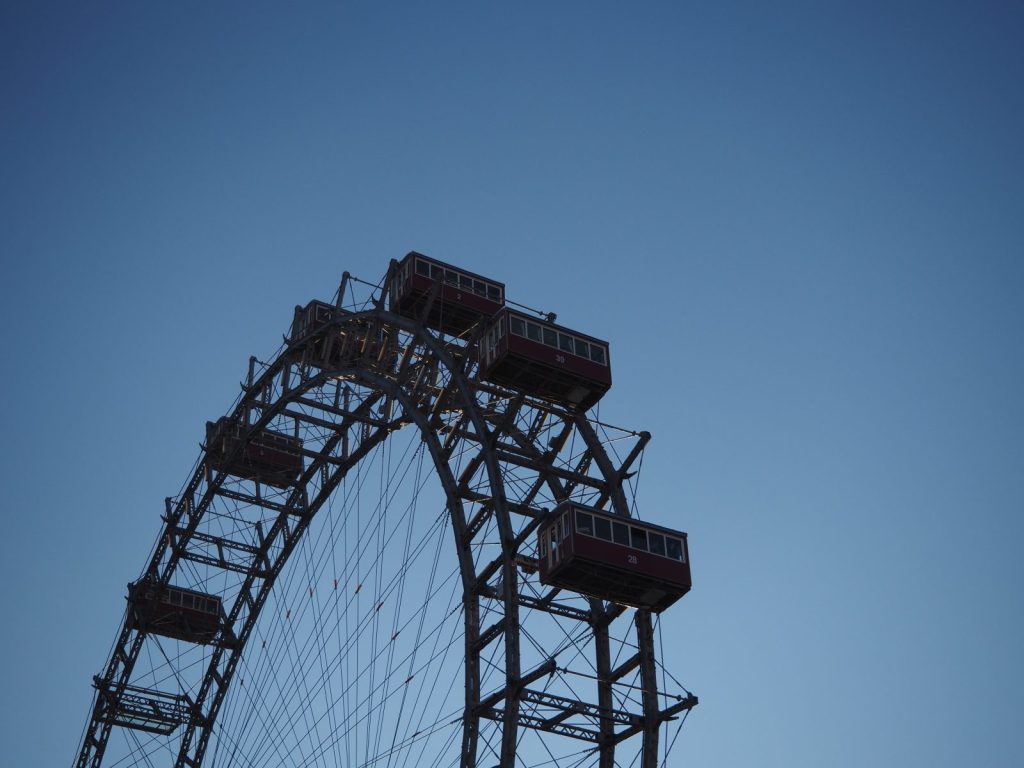
10) Prater and the Giant Ferris Wheel
The Prater is fun, and it’s also one of the best ways to see a different side of Vienna.
Yes, it has the famous Ferris wheel.
But even if you don’t go on rides, it’s still a good place to walk, people-watch, and do something that feels lighter than palace-palace-museum.
Good for: an afternoon where you want fun things to do in Vienna without more history.
11) Donauturm (Danube Tower) for views over Vienna
If you want proper views over Vienna, the Donauturm is a great pick.
I’ve been there, and it’s one of those places that gives you a “wow, Vienna is bigger than it feels when you’re in the centre” moment.
When to go: If you can, aim for late afternoon into sunset in Vienna, because the light over the city can be beautiful.
12) Walk over the Danube (completely free, and one of my favourites)
This is one of my favourite simple activities, and it’s completely free.
Walking over a bridge across the Danube is one of those small travel moments that feels surprisingly good, especially if you’ve spent the day in the busy centre of Vienna.
It’s also a lovely solo activity because:
- You don’t need a plan
- You can go at your own pace
- It feels calm and spacious
If you want “one of the best free” things to do in Vienna, this is it.
13) Hundertwasserhaus and the world of Friedensreich Hundertwasser
If you want something different from the imperial Vienna vibe, head to Hundertwasser.
Friedensreich Hundertwasser’s style is colourful, quirky, and very distinct. It’s a nice change of pace from gothic cathedrals and baroque palaces, and it’s also a good reminder that Vienna isn’t only about the Habsburgs.
Tip: Treat this as part of a neighbourhood wander rather than a single stand-alone stop. Vienna is full of good little combinations like that.
14) Vienna State Opera (Vienna State Opera), even if you go just once
Vienna and classical music belong together.
If you can, seeing a show at the Vienna State Opera is one of those “this is Vienna” experiences. You don’t need to be an opera expert. You just need to be open to the atmosphere.
If you’re nervous about going alone: Don’t be. It’s absolutely normal. Vienna is a city where solo travellers can comfortably do things like this without feeling out of place.
15) Add a classical music evening (beyond the Opera)
Not everyone wants opera.
But if you’re visiting Vienna, I do think it’s worth adding one evening of classical music somewhere, because it fits the city so well. It’s also a great way to balance your trip, because not every night has to be “walk until you drop”.
Easy approach:
- Choose one evening for music.
- Keep the rest flexible for cafés, walks, and a slower pace.
16) Café Central (Café Central), Viennese coffee house classic
I love Café Central, and yes, the Kaiserschmarrn there is worth it.
Viennese coffee house culture is part of what makes Vienna feel like Vienna. It’s not just coffee, it’s the whole idea of sitting down, taking your time, and turning a café visit into an activity.
What to do here:
- Order something you actually want, not just a coffee you feel you “should” get.
- Sit, slow down, and enjoy the atmosphere.
- People-watch, because it’s basically the unofficial entertainment.
This is also one of the best things to do in Vienna alone, because cafés are designed for lingering.
17) Try another classic coffee house (coffee houses in Vienna)
Vienna has plenty of coffee houses, and you don’t need to stick to the most famous one every time.
If you’re staying in Vienna for a few days, make it your mini mission to try two or three different spots. They can all feel slightly different, and it adds a cosy rhythm to your days.
Simple coffee house rule: It’s normal to sit for a while. You don’t have to rush your drink and leave.
18) Ringstrasse walk for architecture lovers
If you like “stunning buildings per minute” walks, Ringstrasse is for you.
You can do it as a full loop, or you can just pick a section. Either way, it’s one of the best ways to enjoy Vienna’s architecture without booking anything.
What you’ll get:
- grand, historic facades
- that elegant “old Vienna” feeling
- plenty of options to pop inside places if something catches your eye
19) Stroll past the Rathaus (Town Hall), especially in winter
The Rathaus area is worth seeing at any time of year.
But if you’re planning Vienna in December, this area becomes one of the classic Christmas market spots, and it’s easy to see why. The setting is dramatic, festive, and very photogenic.
If you’re not visiting in winter, it’s still a good stop on a city centre wander.
20) Pick one more museum in Vienna, based on your interests
Vienna is full of museums, and this is where it helps to choose based on what you actually like.
Here are a few ways to decide:
- If you love art museums, add another gallery-style museum day.
- If you prefer history, choose something that focuses on Austria and Vienna’s past.
- If you are museum-tired, skip it, and use the time for walking and coffee houses.
Important: You do not win a prize for seeing every museum in Vienna. Choose what excites you.
Free things to do in Vienna
Vienna has a reputation for being a bit expensive, but there are plenty of completely free or free to enter things to do that balance out the paid attractions.
Here are some of the best.
Wander the streets of Vienna without a fixed plan
Simply walking through the centre of Vienna is one of the best free activities you can do:
- Narrow lanes and wider shopping streets.
- Hidden courtyards and unexpected churches.
- Small details on façades that you only notice because you look up.
You can follow a rough route or simply drift, knowing that you will eventually circle back towards the cathedral or Ringstrasse.
Visit churches
Most churches in Vienna are free to enter, though they may ask for donations:
- St Peter’s Church for baroque richness.
- Smaller neighbourhood churches that you stumble across on your walks.
They are peaceful places to sit for a few minutes.
Enjoy parks and green spaces
When you need a break from stone and statues, head to one of Vienna’s parks and gardens:
- The Schönbrunn Palace gardens are free to enter and feel huge.
- The Prater park gives you wide open paths and trees.
- Smaller parks along the Ringstrasse or near the city centre.
Parks are also a good spot for a cheap picnic if you pick up snacks from a supermarket.
Explore the palace grounds from the outside
Even if you do not buy tickets for every palace interior, you can still enjoy their grounds:
- Walk around the outer areas of Hofburg.
- Enjoy the formal gardens at Belvedere.
- Stroll up towards the Gloriette at Schönbrunn and just enjoy the view without going inside.
It is a nice balance between “Vienna is one of the best places for imperial architecture” and “I would like to keep some euros for cake”.
Walk along and over the Danube
The Danube is a key part of Vienna, and spending time near the water is free:
- Stroll along the river.
- Walk across a bridge and back again.
- Sit for a while and watch boats go by.
It is a simple thing, but if you are in Vienna for a few days, adding a river walk gives your trip a different mood.
Vienna in December: Christmas markets and winter tips
Vienna in December feels like a Christmas card that someone turned into a real place. If you are planning a winter trip, the city’s Christmas markets are probably already on your list.
I have visited the Christkindlmarkt at the Rathaus and the Christmas market at Schönbrunn, and both are worth including if you are in Vienna in December.
Rathausplatz Christkindlmarkt
The Christmas market in front of the Rathaus is big, busy and very atmospheric. The building creates a dramatic backdrop, and the square fills up with stalls selling:
- hot drinks like Glühwein and punch
- sweets and gingerbread
- decorations, candles and crafts
In the evenings, especially at weekends, it can get extremely crowded, so it is worth going a bit earlier if you prefer slightly calmer conditions.
Schönbrunn Christmas market
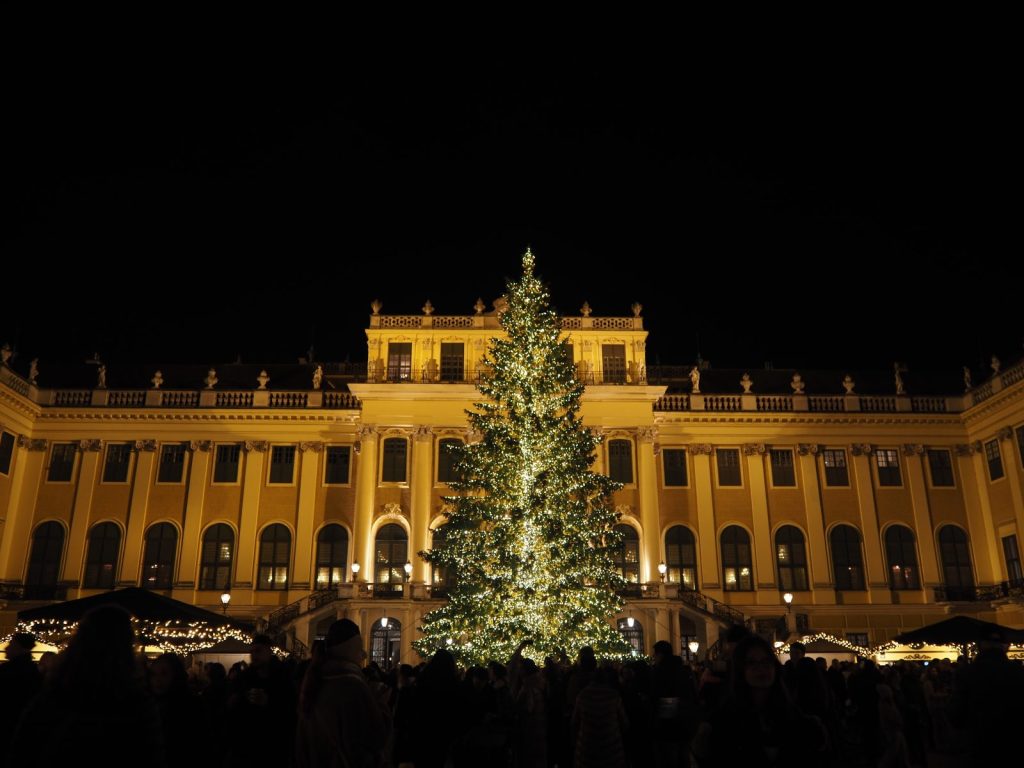
The Christmas market at Schönbrunn Palace feels a little calmer and more spacious. The palace itself rises behind the stalls, and if you have already visited during the day, it is fun to see it again in the evening with lights.
You can:
- Browse stalls for local crafts and decorations.
- Warm up with hot drinks and snacks.
- Enjoy the way the palace is lit up against the night sky.
It combines sightseeing with a Christmas market in one place, which is helpful if you are short on time.
Other Christmas markets in the city
Vienna often has several Christmas markets running at the same time, including:
- Markets around Belvedere Palace
- Smaller neighbourhood markets
- Food-focused markets
Each has its own style, so if you are in Vienna for a few days, it is easy to visit more than one and see the differences.
Winter trip tips for Vienna
A few simple tips for Vienna in December:
- Dress in layers. You will be moving between cold outdoor markets and heated cafés and museums.
- Warm drinks are part of the experience. Standing outside with a hot punch is basically a winter activity.
- Start days a bit later. It is nicer to be out when there is daylight, then lean into the evening Christmas lights.
Vienna is very atmospheric in winter, and public transport makes it easy to get around even in bad weather.
Practical Vienna travel guide
Beyond picking attractions, a few practical questions usually pop up: how many days do you need in Vienna, how to get around, and whether something like the Vienna Pass is worth it.
Here is a short Vienna travel guide to help with planning.
Best time to visit Vienna
Vienna works in every season, but each one has its own mood:
- Spring (April to May). Blossoms in the parks, milder weather, longer days, but not yet peak summer crowds.
- Summer (June to August). Warm or hot, busy, lots of events and outdoor life, good for late evening walks and riverside time.
- Autumn (September to October). Cooler but often still pleasant, with colourful leaves and a slightly calmer feel.
- Vienna in December and winter. Short days, Christmas markets, cosy cafés, atmospheric evenings, and an extra incentive to pop inside museums.
There is no single “best time to visit”, but think about what you enjoy most. If Christmas markets and cosy nights are your thing, winter is perfect. If you prefer long days and sitting outside, spring or summer are more your style.
How many days in Vienna
You can enjoy Vienna on almost any schedule:
- One day in Vienna: Focus on the city centre, Stephansdom, the Hofburg area and one coffee house.
- Two days in Vienna: Add Belvedere or Schönbrunn and one museum, plus perhaps the Prater.
- Three days in Vienna: Add Donauturm, a classical music evening, and more relaxed walks.
- Four or more days: Use the extra time for slower mornings, more cafés, additional museums or a small day trip.
If you like to travel slowly, three to four days is ideal for a first visit to Vienna, because you can see the top attractions without feeling rushed.
Public transport in Vienna
Public transport in Vienna is one of the easiest ways to get around:
- U Bahn (metro) lines connect major areas quickly.
- Trams are great for short hops and are a fun way to see the streets of Vienna roll by.
- Buses fill the gaps where needed.
Tickets are usually valid across all three types of transport, and you can buy single tickets, day tickets or passes.
As a visitor, the system is straightforward and reliable. It is one of the reasons Vienna works so well as a solo travel destination: you do not need a car, and you can get nearly everywhere without stress.
Vienna Pass, Niederösterreich Card and other tickets
People often ask whether the Vienna Pass is worth it. The answer depends on how you like to travel:
- If you plan to visit several of the big paid attractions in Vienna in a short time (multiple museums, palaces and tours each day), the Vienna Pass can be good value and a convenient way to bundle tickets.
- If you prefer to mix a few paid attractions with lots of walking, free sights and café time, it might not save you money.
Personally, I have not used the Vienna Pass. I do have the Niederösterreich Card, which is more relevant to where I live in St Pölten and the surrounding region, but it also includes a few attractions to visit in Vienna. If you are travelling more widely in Lower Austria, this can be worth looking into, but for most city visitors, the standard Vienna-specific options are enough.
Self-guided tours: GPSmyCity and Komoot
For sightseeing, I like using GPSmyCity and Komoot:
- GPSmyCity is handy for self-guided city walks. You can follow routes that hit many of the main attractions in Vienna without needing to join a guided tour, which works well if you enjoy exploring at your own pace.
- Komoot is great for more walking or cycling-focused routes, including routes that take you along the Danube or through parks.
Using these apps lets you feel a bit more like a local, while still making sure you see the main places you came to Vienna for.
Where to stay in Vienna
When you look for places to stay in Vienna, think about how you want your days to feel:
- Vienna city centre (Innere Stadt). Ideal if you want to be close to most of the top attractions, able to walk to Stephansdom, Hofburg, Kärntner Straße and many cafés. It is convenient but can be more expensive.
- Neighbourhoods just outside the centre. Often slightly cheaper and still very well connected by U Bahn or tram. You might get a more local feeling in the evenings, away from the busiest tourist streets.
You will also see luxury hotels such as the Park Hyatt Vienna, mentioned in many Vienna travel guides. Even if this is not your budget, it gives you a sense of where the most central, high-end accommodation clusters are and what people mean when they talk about staying “right in the centre of Vienna”.
Wherever you stay, check your nearest public transport stops so you can easily move around the city.
Around Vienna: easy add-ons
If you have more days in Vienna or you are using it as a base, there are many places in Austria to see that make good day trips, including:
- Smaller towns and wine areas near the Danube.
- Classic day trips to places like Salzburg or the Wachau.
Because you live in St Pölten, you will already know how easy the trains can be, but for visitors, it is worth mentioning: Austria’s rail network is usually efficient and clean, which helps when planning trips around Vienna.
Conclusion: Things to Do in Vienna
Vienna is one of the best places to visit if you like a mix of culture, history and simple pleasures like walking and café time. It is packed with palaces and museums, but it is also the kind of city where some of the best memories come from smaller moments:
- standing quietly in St Peter’s Church
- eating Kaiserschmarrn in Café Central
- walking across the Danube at sunset
- turning a corner and finding yet another beautiful church or façade
If you are a solo traveller, Vienna is especially kind. It feels safe, it is normal to eat or drink alone, and public transport makes it very easy to move around without a car or travel partner.
Whether you are planning one day, three days or a longer stay in Vienna, I hope this guide helps you choose the best things to do in Vienna for you, from the big famous sights to the free, simple moments that make a trip feel personal.
FAQ: Things to do in Vienna, Austria
What are the must-see attractions when visiting Vienna, Austria?
Must-see attractions include Schönbrunn Palace and Gardens, the Hofburg Imperial Palace, St. Stephen’s Cathedral (Stephansdom), Belvedere Palace, the MuseumsQuartier, and the Prater with its Giant Ferris Wheel.
How much time should I spend in Vienna to see the main sights?
Plan at least 2–4 days to cover major sights and museums. A 1–2 day quick visit can hit highlights like the Hofburg, St. Stephen’s, and a classical concert, while 3–4 days lets you explore museums, palaces, markets, and nearby day trips.
What are the best neighbourhood areas to explore in Vienna?
Explore the Innere Stadt (historic centre) for architecture and shopping, Leopoldstadt for the Prater and Karmelitermarkt, Mariahilf for boutiques and the Naschmarkt, and the MuseumsQuartier for culture and cafes.
Is public transport easy to use for getting to Vienna’s attractions?
Yes. Vienna has an extensive U-Bahn, tram, and bus network. Single tickets, 24/48/72-hour passes, and weekly tickets are available. Most tourist attractions are easily reached by U-Bahn or a short walk.
What are the top museums to visit in Vienna?
Top museums include the Kunsthistorisches Museum, Albertina, Leopold Museum, Belvedere (art and Klimt’s “The Kiss”), and the Naturhistorisches Museum. The MuseumsQuartier hosts several contemporary art venues.
Can I enjoy classical music and opera in Vienna?
Absolutely. Vienna is famous for classical music – book tickets for the Vienna State Opera, Musikverein, or smaller venues and historic churches for chamber music and Mozart/Schubert recitals.
What local foods and drinks should I try in Vienna?
Try Wiener Schnitzel, Tafelspitz, Apfelstrudel, Sachertorte with coffee, and local wines or a Heuriger (wine tavern) experience. Visit the Naschmarkt for street food and regional specialities.
Are there good day trips from Vienna?
Popular day trips include the Wachau Valley and Melk Abbey, Bratislava (Slovakia), and the wine villages around Vienna, such as Grinzing and Heiligenstadt. Each is reachable by train or boat.
What is the best time of year to visit Vienna?
Spring (April–June) and autumn (September–October) offer mild weather and fewer crowds. December is magical for Christmas markets; summer brings festivals, but can be busier and warmer.
Is Vienna expensive for tourists?
Vienna is moderately priced compared with other Western European capitals. Accommodation and fine dining can be costly, but public transport, markets, free walking tours, and many museums with discounted days make it manageable on a budget.
Are walking tours recommended for discovering Vienna?
Yes. Walking tours, free or paid, are ideal for exploring the historic centre, learning about Habsburg history, and discovering hidden courtyards, coffee houses, and street art.
Do I need to buy tickets in advance for attractions in Vienna?
For popular attractions like Schönbrunn Palace tours, the State Opera performances, and Klimt’s “The Kiss” at the Belvedere, it’s wise to book in advance, especially during high season.
How can I experience Vienna’s coffeehouse culture?
Visit historic cafés like Café Central, Café Sacher, or Demel to sample coffee and pastries, relax, and soak up the elegant atmosphere. Many cafes welcome lingering and reading. Part of the Viennese tradition.
Where can I find more information and tickets for things to do in Vienna, Austria?
Official tourism sites, museum websites, and ticket platforms provide up-to-date opening hours and booking options. Consider the Vienna PASS or Vienna City Card if you plan to visit multiple paid attractions and frequently use public transport.


