10 Hidden Gems in Lower Austria You Shouldn’t Miss
This site may contain affiliate links. If you click through and make a purchase, I may earn a small commission at no extra cost to you. You can check out the T&Cs for more information. Thank you for supporting the blog.
When most people think of Austria, they picture Vienna’s grand boulevards or the mountains around Innsbruck and Salzburg. But between the capital and the high Alps lies Lower Austria (Niederösterreich), a region of rivers, forested hills, wine villages, and small towns that rarely make it onto classic itineraries.
It’s also the part of Austria I call home, and over time I’ve discovered just how wonderful it can be: quiet trails where you might not meet anyone for an hour, castles half-hidden in the woods, and cafés where the loudest sound is the coffee machine.
If you’re planning a solo trip to Austria and would like to go beyond the usual stops, here are 10 hidden gems in Lower Austria that are perfect for slower, more reflective travel.
Why Lower Austria Is Ideal for Solo Travellers
Before we dive into specific places, a quick word on the vibe here.
Lower Austria is great if you:
- Prefer villages and small towns over big city nightlife
- Love walking and hiking, but don’t need extreme mountain sports
- Enjoy wine, rivers, and castles more than shopping malls
- Want spaces where you can simply be on your own without standing out
Public transport reaches many of these spots, but having a car or joining a small-group tour will give you more flexibility.
1. Dunkelsteinerwald & Ruine Hohenegg
Just south of the Danube, between Melk and Krems, lies the Dunkelsteinerwald, “Dark Stone Forest”. Despite the dramatic name, it’s more peaceful than ominous: a patchwork of quiet villages, small churches, and gentle woodland.
One of its calmest corners is Ruine Hohenegg, the remains of a medieval castle tucked away in the forest. From up here, you can peek towards the Wachau Valley and the Danube glinting in the distance.
- Expect: forest paths, birdsong, and very few other people
- Best for: half-day walks, picnics, and a proper digital detox
If you’re coming from St. Pölten, it’s an easy drive. Bring snacks and maybe a book. This is a “sit on a rock, stare into the trees and breathe” kind of place.
2. Schallaburg Castle and Gardens
A short hop from Melk, you’ll find Schallaburg, a Renaissance castle with a beautiful arcaded courtyard and gardens that feel made for slow wandering.
It’s well-known within Austria but still manages to avoid heavy crowds, especially on weekdays.
- Inside: changing exhibitions on history and culture
- Outside: roses, herbs, and quiet spots to sit and daydream
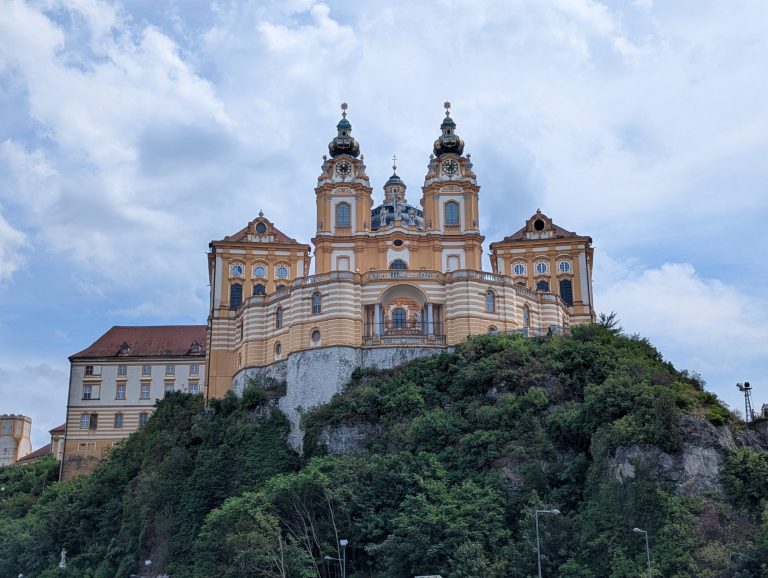
You can reach Schallaburg by combining a train to Melk with a local bus or taxi. If you’re driving, it pairs nicely with a visit to Melk Abbey or a walk in the Dunkelsteinerwald.
3. Ötschergräben & Ötscher-Tormäuer Nature Park
Sometimes called “Austria’s Grand Canyon”, the Ötschergräben are a series of gorges and waterfalls carved into the landscape around the mountain Ötscher. They’re part of the Ötscher-Tormäuer Nature Park, one of the most dramatic areas in Lower Austria.
The main hiking routes follow a turquoise river through narrow ravines, across wooden bridges and past waterfalls that roar after rain.
- Terrain: proper hiking (good shoes needed), but not technical
- Atmosphere: wild, refreshing, and wonderfully good at clearing your head
If you prefer solitude, start early in the day or go during the week. Spending a night in nearby villages like Annaberg or Mariazell breaks up the trip and lets you slow down.
4. Klostertaler Gscheid and Its Chapel
For Alpine scenery without the ski-resort crowds, make your way to Klostertaler Gscheid, a small mountain pass connecting Gutenstein and Schwarzau im Gebirge.
At the top you’ll find:
- A tiny white chapel framed by larch trees
- Wide views over valleys and forested slopes
- A level of quiet that makes you instinctively lower your voice
You can drive, cycle, or (if you’re keen) hike in the area. In summer, you might see a few cyclists; in the off-season, you may have it almost to yourself. Perfect for thinking walks and slow photography.
5. Museumsdorf Niedersulz
North of Vienna, near the Slovak border, lies Museumsdorf Niedersulz, an open-air museum that recreates village life from centuries past. Original farmhouses, workshops, and small public buildings have been moved here and carefully restored.
Wandering the lanes, you’ll come across:
- Wooden barns and traditional houses
- Herb gardens, chickens, and old tools
- Quiet corners where time feels… slower
It’s great if you enjoy history but don’t want a busy indoor museum. You can wander at your own pace, sit on a bench, and just watch everyday rural life being re-created around you.
6. Pielachtal – The Dirndl Valley
The Pielach Valley (Pielachtal), south of St. Pölten, is sometimes called the “Dirndl Valley”, named after the bright red cornelian cherries grown here.
What you’ll find:
- A small river winding through green hills
- Walking and cycling paths with gentle gradients
- Traditional guesthouses where evenings are still quiet
It’s ideal for a low-key weekend: one or two hikes, a village café, and early nights with a book. If you’re travelling by train, look at routes via the Mariazellerbahn, a scenic local railway.
7. Quiet Wachau Wine Villages
The Wachau Valley – the stretch of the Danube between Melk and Krems – is a UNESCO World Heritage site. Many visitors know Dürnstein, but the tiny wine villages along the river are every bit as charming and often more peaceful.
Consider basing yourself in places like:
- Rossatz – vineyards, river views, and a slower rhythm
- Joching or St. Michael – tiny, with easy access to walking and cycling paths
You can walk between several villages, hop on the river ferry, or rent a bike and meander between vineyards and church towers.
8. Krems an der Donau’s Old Town
While Krems itself isn’t exactly a secret, many travellers rush through on day trips and miss how gentle it can feel if you give it time.
In Krems you’ll find:
- A compact, walkable old town with pastel facades
- Courtyards and side streets that tourists rarely enter
- Wine taverns (Heurige) where evenings feel local and unhurried
Stay a night, wander without a fixed plan, and use it as a base for exploring the surrounding Wachau by bus, boat, or bike.
9. Waidhofen an der Ybbs
Waidhofen an der Ybbs sits in a valley framed by hills and the river Ybbs, and it’s one of my personal “comfort places” in Lower Austria. In autumn, the trees along the river turn copper and gold, and mist often hangs low over the water.
Expect:
- A small but pretty historic centre
- Riverside walks with views of the castle tower
- A slower pace that suits introverts perfectly
It’s the kind of town where a simple afternoon of walking, café-hopping, and sitting by the river feels like enough.
10. Mariazell and the Surrounding Hills
Technically sitting right on the border of Styria and Lower Austria, Mariazell is famous as a pilgrimage town – but it’s also a peaceful base for walking, especially outside peak religious holidays.
You get:
- A striking basilica dominates the main square
- Forested hills and gentle trails around town
- Traditional shops selling gingerbread and herbal liqueurs
You can pair Mariazell with a hike in the Ötscher-Tormäuer region or a scenic ride on the Mariazellerbahn.
A Simple Two-Day Lower Austria Itinerary
If you’re staying in St. Pölten or Vienna and want a short break that combines several of these spots, here’s an easy, introvert-friendly option inspired by my own trips.
Day 1
- Morning: Train or drive to Melk, then continue to Schallaburg Castle
- Afternoon: Short walk in the Dunkelsteinerwald (for example, around Ruine Hohenegg)
- Evening: Stay overnight in a guesthouse in the Pielach Valley or near Melk
Day 2
- Morning: Head into the Wachau Valley, visiting one or two quieter wine villages
- Afternoon: Stop in Krems for a stroll around the old town and an early dinner
- Evening: Return by train or car
Plenty of scenery, lots of calm, and no need to rush from attraction to attraction.
Recap – Lower Austria’s Hidden Gems
Lower Austria won’t compete with Vienna or Salzburg for big headlines – and that’s exactly why it’s so enjoyable.
It’s a region of soft hills, river bends, and small discoveries: a chapel in the mist, a ruined castle in the forest, a wine village where you can hear your own footsteps.
For introverted solo travellers, these hidden gems aren’t just places to tick off. They’re backgrounds for quiet mornings, unhurried walks, and the kind of stillness you rarely find in busier destinations.